Resin, Vitrified, or Metal Bond? What Diamond Wheels Are Made Of
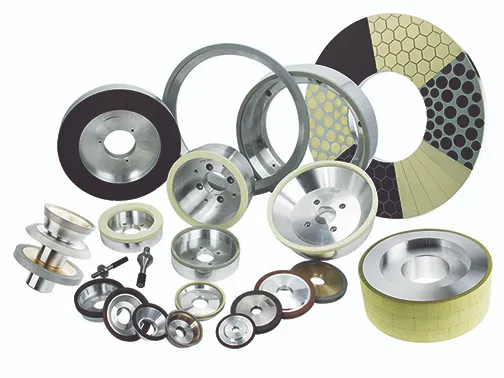
The bond holds the diamond grains in place. Three main types are used in diamond grinding wheels: resin, vitrified, and metal. Here’s what goes into each.
Resin Bond
- Base: resin material
- Added: metals and metal oxide powder
- Plus: conventional abrasive powder
Vitrified Bond
More complex than resin. Built from three raw material groups:
- Plasticity materials — loess, clay, bentonite
- Barren materials — fluorite, quartz
- Accelerating melting materials — borax glass, talc, feldspar
Metal Bond
- Base: metal powder or alloy powder
- No resin or ceramic filler involved
Comparison Table
| Type | Bond Feature | Grinding Behavior | Applications |
|---|---|---|---|
| Resin Bond | Good elasticity, moldable into complex shapes, good polishing performance. Poor heat resistance, poor acid/alkali resistance, weaker grain retention. | Good self-sharpening, resists loading, high efficiency, low grinding temperature and roughness. | Tungsten carbide, PCD, PCBN tools, PDC, optical glass polishing |
| Vitrified Bond | Good shape retention, chemically stable, heat/water/oil/acid/alkali resistant, strong grain holding. | Longer life than resin, sharp and efficient, resists heat and loading, easy to control accuracy, easy to dress. | PCD and PCBN tools, tungsten carbide, engineering ceramics |
| Metal Bond — Bronze | High strength, tough, durable, strong grain holding, poor self-sharpening. | High wear resistance, handles heavy loads, but easy to load up and hard to dress. | Glass, ceramic, stone |
| Metal Bond — Electroplated | Thin single abrasive layer, high grain density, sharp cutting edge. | No dressing needed, but no re-dressing possible; shorter life. | Complex geometries, profiled abrasives |
Choosing a bond isn’t just about the material you’re grinding — it’s about balancing wheel life, precision, and how much dressing your process can tolerate.
Need help picking a bond for your application? Reach out to ZY Industrial at tanya@zyindustrial.com.