Applications of Vitrified Diamond Grinding Wheels
Vitrified diamond wheels handle some of the hardest materials in manufacturing. Here’s where they’re used, and why that list keeps growing.
Semiconductor and Solar Wafers
Wafer backgrinding demands a clean, damage-free surface. Vitrified diamond wheels deliver tight dimensional control with no harmful residue. This makes them standard equipment for silicon wafer processing.
PCD and PCBN Cutting Tools
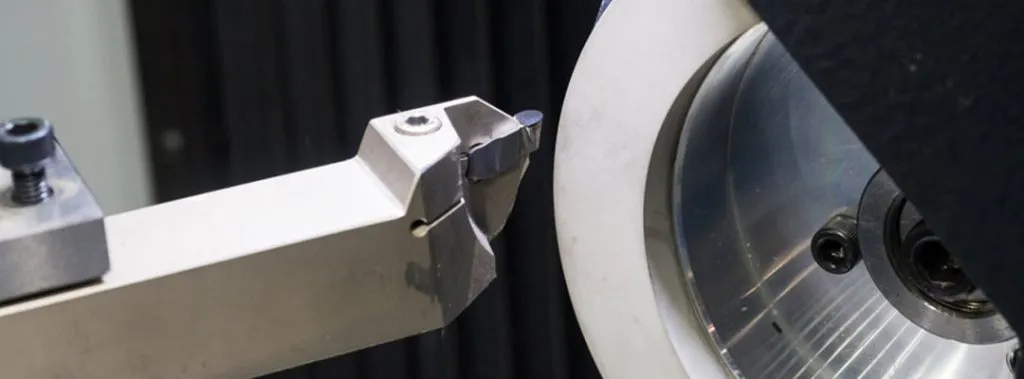
Grinding PCD and PCBN inserts is tough. The workpiece is nearly as hard as the wheel itself. Metal bond wheels were the old standard here, but they need constant electrical dressing to stay sharp. Vitrified bond wheels self-sharpen more naturally. That’s why they’ve become the preferred choice for most PCD/PCBN tool grinding in recent years.
PDC Cutters
Polycrystalline diamond compact (PDC) cutters, used in oil and gas drill bits, need precision and wheel life. Compared to resin bond, vitrified bond wheels last roughly 2.5–3x longer on PDC and hold tolerance closer to ±0.01mm. Grinding time drops too.
Monocrystalline Diamond Tools
Diamond-on-diamond grinding is a specialized process. Vitrified bonds offer the grain retention needed to shape and finish diamond tooling without excessive wheel wear.
Tungsten Carbide (Cemented Carbide)
Carbide tooling is hard and abrasion-resistant. Diamond is the only abrasive that cuts it efficiently. Vitrified bond gives a good balance of grain retention and self-sharpening for carbide tool production.
Engineering Ceramics, Crystals, and Rare Earth Materials
Silicon carbide, silicon nitride, and other structural ceramics are hard but brittle. Resin bond wears too fast on these materials. Metal bond is hard to dress and can over-hold the diamond. Vitrified bond splits the difference — enough grip to cut efficiently, enough porosity to stay sharp.
Where the Technology Is Headed
A few trends are pushing demand for vitrified diamond wheels higher over the next few years.
Chip demand is rising. AI and power electronics are driving more wafer production, including wide-bandgap materials like SiC and GaN. Both need precision grinding.
Metal bond is losing ground in tool grinding. As vitrified formulations improve, more PCD/PCBN grinding shops are switching over for the efficiency gain.
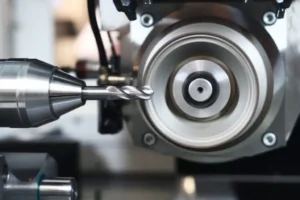
Automation is the norm, not the exception. Shops running lights-out on 5-axis CNC tool grinders (ANCA, Walter, Rollomatic) need wheels with predictable, consistent wear. Vitrified bond fits that requirement well.
Engineering ceramics keep expanding. EV components, aerospace parts, and electronics are using more structural ceramics, and all of it needs grinding.
If your process touches any of these materials, it’s worth reviewing whether your current bond type is still the right fit.
Reach out to ZY Industrial at tanya@zyindustrial.com to discuss specs for your application.